
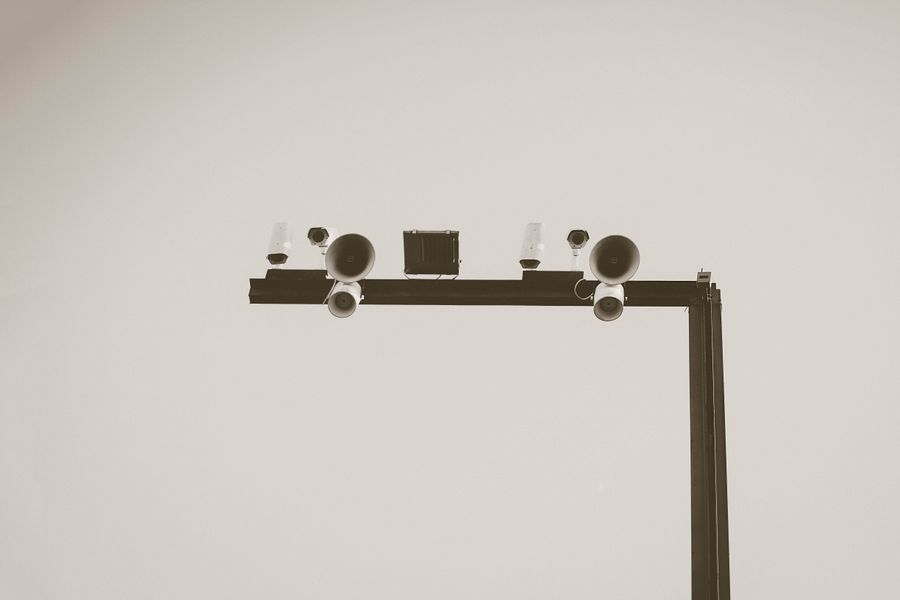
Logistics warehousing monitoring solution
1. Industry security needs and pain points
Logistics and warehousing operations are fast-paced, with frequent goods transfers and high personnel mobility. Monitoring must not only prevent theft, but also solve the problems of responsibility definition and efficiency management:
- Liability for cargo damage is difficult to define: Goods are handed over multiple times during loading, unloading, sorting, and transportation. It is difficult to determine the responsible link when damage or missing items occur.
- High value cargo risk: High-value categories such as 3C, medicine, and alcohol are easy targets for internal and external theft.
- Large space and many blind spots: High-level shelves, end of aisles, container loading and unloading areas and other locations are easily overlooked.
- Decentralized management of multiple warehouses: There are a large number of regional warehouses and front-end warehouses, making it difficult for the headquarters to conduct unified supervision and respond quickly.
2. Construction Goals
- The platform, aisles, sorting area, warehouse area perimeter and high-value product area are all covered, and there are no blind spots in key links.
- Traces are left throughout the entire process of warehousing, loading and unloading, and cargo damage and missing parts can be traced to specific links.
- Operation specifications (such as forklift speed limits, channel occupancy) can be monitored, and safety hazards can be discovered.
- Supports centralized management and remote access of multiple warehouses, and reports abnormal situations in a timely manner.
3. Overall system architecture
- Front-end collection layer: Platform wide dynamic camera, shelf channel wide-angle camera, sorting area high-definition camera, high-value area zoom machine, perimeter infrared camera, license plate recognition machine.
- network transport layer: PoE access + optical fiber backbone in the warehouse, supplemented by wireless bridging in the large-span warehouse area.
- storage management layer: Mainly local storage in the warehouse, centralized management and key video backup on the headquarters platform.
- Application linkage layer: Connect with WMS, access control, weighbridge, and barrier gates, and associate and archive work documents with video clips.
4. Key point layout and equipment selection
| point | Recommended models | Key parameters | Monitoring target |
|---|---|---|---|
| loading dock | WDR waterproof camera | Strong light suppression, all-weather | Loading and unloading process, quantity and damage check |
| Shelf main channel | Wide angle infrared camera | Corridor mode, long distance | Picking operations, channel occupancy |
| Sorting work area | HD dome camera | High frame rate, clear details | Sorting accuracy, responsibility definition |
| High value product storage area | Zoom HD Camera | Preset position, 24 hours recording | Anti-theft of high-value goods |
| Vehicle entrance and exit | license plate recognition camera | Wide dynamic range and fill light integrated | Vehicle entry and exit, document verification |
| Perimeter of the reservoir area | Infrared waterproof camera | Long-distance infrared, anti-tamper | Night prevention and over-the-counter intrusion |
5. Core functions and business value
- Clear responsibilities: The traces left by the operations in each link, cargo damage and missing parts can be located to the specific time period, work station and personnel.
- High value protection: High-definition coverage and alarm linkage in key warehouse areas significantly reduce the risk of internal and external theft.
- Operational compliance: Channel occupation and illegal operations can be discovered and included in assessments to reduce safety accidents.
- Document association: Video clips are bound to the inbound and outbound documents for archiving, and the original records can be retrieved with one click in case of disputes.
- Multiple warehouse management: The headquarters platform can uniformly view the real-time status and equipment status of each warehouse, and the management radius has been significantly expanded.
6. Implement delivery and service guarantee
- Determine the points based on the layout of the warehouse area and the height of the shelves, focusing on eliminating blind spots at the ends of high-level shelves and aisles.
- Construction should be carried out in different areas to avoid peak hours of work. If necessary, work should be carried out at night and safety precautions should be taken.
- Complete the data docking and linkage strategy configuration of WMS, weighbridge, and gates.
- Train warehouse management and loss prevention personnel, and clarify video review and archiving standards.
- Provide warranty, spare parts and regular inspections to support temporary site expansion during peak seasons.
7. Typical configuration suggestions
Standard warehousing center (5000-10000㎡) recommends: 1 unit per berth on the platform, 1 unit every 30-50 meters in the main aisle, no less than 2 units every 200㎡ in the sorting area, independent coverage and extended storage of high-value areas, and 1 unit every 50-80 meters on the perimeter. Storage is calculated based on 30 days, and 60-90 days is recommended for platforms and high-value areas. In the high-level shelf area, it is recommended to use a high-altitude ball machine with a channel gun to form a "face + point" double coverage, taking into account the overall situation and details.
Related Products
-55958ef8.jpg)
-a188c327.jpg)
Consult about this solution
Leave your requirement and we will contact you soon.