

Park security monitoring solution
1. Industry security needs and pain points
Industrial parks, science and technology parks, and logistics parks have production, office, warehousing, and human settlement attributes. The security targets are complex: they must prevent external intrusions and vehicle thefts, and also manage internal order of people and vehicles and production safety. Frequently asked questions include:
- Weak perimeter defenses: The park has long walls and many corners, so manual patrols alone are difficult to complete. Intrusions over the walls are often discovered only after the fact.
- High pressure at the entrance and exit: Traffic flow is concentrated during the peak hours of commuting, and external vehicles and visitors mix in. Paper registration is inefficient and easy to falsify.
- Subsystems work independently: Access control, visitors, vehicles, and videos belong to different manufacturers, and the data is blocked. Event handling must be checked across systems.
- Night and rain and fog blind spots: There is insufficient lighting in the periphery of the park and the yard, and ordinary cameras have poor nighttime effects.
2. Construction Goals
- Video coverage of the park perimeter, entrances and exits, main roads, and key areas has no blind spots.
- The passage of people and vehicles can be traced, and external visitors leave traces throughout the entire process.
- Abnormal events such as perimeter intrusions and regional boundary violations automatically alarm and record videos.
- Establish a unified monitoring center to realize centralized duty and scheduling across subsystems.
3. Overall system architecture
- Front-end collection layer: Entrance and exit license plate recognition cameras, perimeter infrared tube cameras, main road ball cameras, indoor dome cameras, and key area zoom models.
- network transport layer: Aggregation points are divided by region, optical fiber backbone + PoE access, video network and office network are logically isolated.
- storage management layer: Combined regional storage and central centralized storage, double backup of important points.
- Application linkage layer: The video is linked with access control, visitors, vehicle gates, and alarm hosts to form a closed loop of "discovery-review-disposal".
4. Key point layout and equipment selection
| point | Recommended models | Key parameters | Monitoring target |
|---|---|---|---|
| Park main entrance | License plate recognition camera + barrier gate | Wide dynamic range, integrated fill light, high recognition rate | Vehicle entry and exit records, black and white list control |
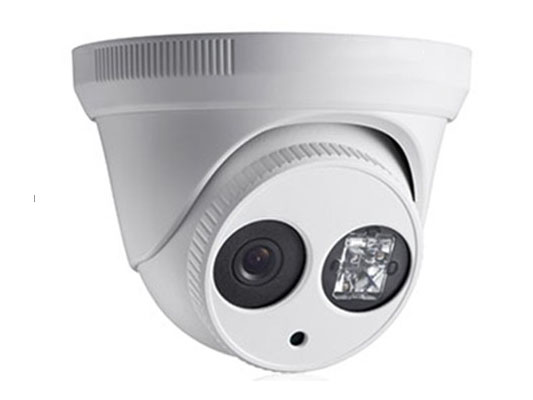
| Pedestrian/lobby | Network infrared dome camera | Wide angle, beautiful, supports backlight compensation | Personnel entry and exit, visitor trajectory |
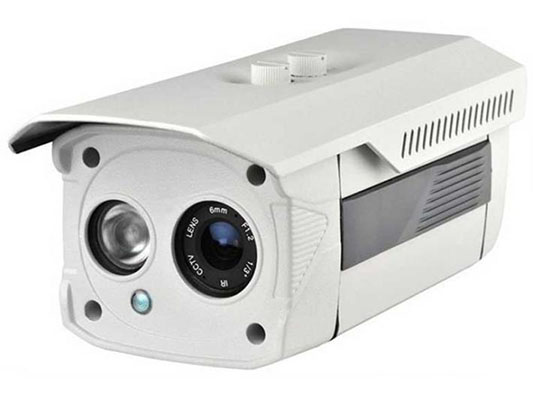
| perimeter wall | Network infrared waterproof camera (through-beam point) | Long-distance infrared, IP66, anti-tamper | Overpass intrusion detection and recording |
| Main street/square | HD network dome machine | Large magnification zoom, cruise preset position | Global situation and event tracking |
| Machine room/hazardous chemicals warehouse | Zoom infrared camera | Wide dynamic and abnormal behavior detection | Double-person and double-lock supervision of key parts |
| PARKING LOT | Waterproof camera + parking space guidance (optional) | Low illumination, anti-glare | Vehicle safety, scratch evidence collection |
5. Core functions and business value
- perimeter defense: Cross-border detection, regional intrusion detection and active alarm, linking sound and light warnings and video capture, turning "post-event investigation" into "intervention during the incident".
- Traceability of people and vehicles: License plate recognition is associated with people’s traffic records, and the complete trajectory of any event can be restored according to the timeline.
- Unified duty: Multiple subsystems are linked on one screen, and the on-duty personnel can complete review and scheduling in the monitoring center.
- Hierarchical authorization: Viewing and access permissions are assigned according to departments and positions, and video access traces are left, complying with internal control requirements.
- Reduce costs and increase efficiency: Reduce the manpower on duty at fixed security points, automatically detect abnormal events, and significantly improve inspection efficiency.
6. Implement delivery and service guarantee
- Conduct on-site surveys and draw site layout diagrams, pipe network routing diagrams and system topology diagrams.
- Construction is divided into regions, with priority given to completing the perimeter and entrances and exits, and then moving forward to indoor locations.
- Complete the interface joint debugging and linkage policy configuration with access control, visitors, and gates.
- Alarm plan drill: simulate intrusion, tailgating, vehicle collision and other scenarios to verify the response link.
- Provides operational training, completion documentation and quality assurance services, with optional annual on-site inspections.
7. Typical configuration suggestions
Medium-sized parks (within an area of 50,000 square meters) recommend: 2-4 sets of license plate recognition at entrances and exits, one perimeter camera every 50-80 meters, 4-6 ball machines on the main road, and indoor hemispheres configured according to floors and corridors; storage is calculated as 30 days, and 60-90 days in key areas. When the perimeter is long or the lighting is insufficient at night, it is recommended to add fill light or use a model with a longer infrared range.
Related Products
-aa98b3df.jpg)
Consult about this solution
Leave your requirement and we will contact you soon.